Showing posts with label Humorists. Show all posts

Saturday, May 28, 2011

Ata ul Haq Qasmi; a Leading Urdu Writer

Ata ul Haq Qasmi (عطا الحق قاسمی) is one of the leading and most popular columnist of Pakistan who has been writing Urdu columns for more than last 45 years in the leading newspapers with the name of "Rozan-e-Dewar Sey". The most distinguished character of Qasmi's column is his satire on social inequalities of the society and his anti dictatorship stance which he boldly takes in his columns. 

He has a unique style of writing incomparable to any other columnist because of his humorous way which holds the reader till the last line of his column which is his punch line.
Qasmi was also elevated to the position of Ambassador of Pakistan in Norway and Thailand during 1997 to 1999. He is also a very famous drama writer and poet. His books of columns include "Column Tamam", "Shar Goshiyan", "Hansna Rona Mana Hay", "Mazeed Ganjey Farishtey" and many more while his TV Drama Serials include the most popular "Khwaja and Son", "Shab Daig", "Sheeda Talli" etc.

His travelogues are also very popular and one of the best is "Shoq-e-Awargi". Qasmi has also received the Pride of Performance and Sitara-e-Imtiaz (highest civil awards) from President of Pakistan in addition to many other awards over his literary contributions.

Mushtaq Ahmad Yousfi has termed Qasmi as the best columnist of Pakistan while Altaf Gohar has termed him as the wittiest columnist of Pakistan.

Saturday, May 14, 2011

Col. Muhammad Khan; Famous Urdu Humorist

Colonel Muhammad Khan (Urdu: کرنل محمد خان) (born 1910 – October 23, 1999) was a Pakistan Army officer and a war veteran. He also served in the Indian Army of the undivided British India and was a veteran of World War II. While serving in Pakistan Army, he wrote his first book Bajung Aamad (Urdu: بجنگ آمد) which was a humorous autobiography‎. This book became extremely popular and became one of the most famous books in Urdu literature. The success of his first book earned him critically acclaimed prominence among Urdu humorists and he is considered one of the most influential authors of this genre. He was the fellow of Mushtaq Ahmad Yusufi, Syed Zameer Jafferi, Shafique-ur-Rehman.

He is mostly known as Colonel Muhammad Khan to distinguish him from other bearers of this common name, despite his efforts to be recognised by his birth name. Later editions of his books show his name as just Muhammad Khan.

He was born as Muhammad Khan in the village of Balkasar which is a part of city of Chakwal, Punjab, Pakistan. He studied in Islamia College Civil Lines and when World War II broke out, he joined the British Indian Army. He served in Iraq, Egypt and Palestine. In the Libyan Desert, he valourously fought against the Germans.

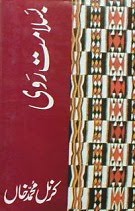
He rose to fame when he surprised the literary circles through his book Bajung Aamad. It was an autobiographical account of his life as a soldier in World War II. In 1974, he went on a tour of the UK and later published his account of the UK tour in Basalamat Ravi. Later he published another book, Bazam Arayan, a collection of semi autobiographical short stories. His famous books are given below:


• Bazam Araiyan
• Badesi Mazah

• Tasneefat-e-Kernal Muhammad Khan

Tuesday, April 19, 2011

Muhammad Siddiq Salik; a Celebrated Urdu Writer

Brigadier General Muhammad Siddiq Salik (Urdu: برگیڈیر جنرل محمد صدیق سالک) (1935) (September 6, 1935 – August 17, 1988), was a 1 star general in the Pakistan Army and former director-general of the Inter Services Public Relations who headed ISPR from August 1985 till his death. Brigadier-General Salik is most known as a close associate of former Pakistani President General Muhammad Zia-ul-Haq.

Siddique Salik was born in village Manglia Kharian, Gujrat District, Punjab. He belongs to a noble Jat family. Salik schooled in Lahore and graduated from Punjab University earning a degree in English literature and international relations. Before receiving his commission in the Pakistan Army, Salik had taught English literature in few colleges in Lahore.
Salik fought in the Indo-Pakistani War of 1965. In 1971, Salik, as Major, was stationed in East Pakistan, when the 1971 Pakistan-India (fought between 26 March-16 December) and Indo-Pakistani War of 1971 (fought between 3 December-16 December) took place. Captured by Indian troops on December 19, 1971, Salik was initially incarcerated in Agra jail before being shifted to various other prisons as a Prisoner of War. He was eventually handed over to Pakistan under the Simla Agreement which vouched for exchange of prisoners.

Salik was a celebrated writer. He wrote an insightful book titled Witness to Surrender (Urdu version: "Meinay Dhaka Doobtay Dekha") based on his recollection of the war.
In 1977, General Zia became President of Pakistan following a bloodless coup. Zia-ul-Haq removed civilian officers from top posts and appointed a new military junta, which included Salik amongst its members. On August 17, 1988, Salik was traveling with President Zia in his plane as his press secretary and director general inter services public relations, along with U.S. ambassador Arnold Raphel, when the plane crashed under mysterious circumstances killing all on board.

Salik authored six Urdu and 3 English books. Among these, the "Witness to Surrender" (ISBN 81-7062-108-9) recounts the 1971 Pakistan-India war, as seen by Salik who was posted there as the Public Relations Officer.
His other books include humaa yaran dozak(a recollection of his years as a prisoner of war after the fall of Dacca, East Pakistan), ta damay tehreer (Urdu), emergency, pressure cooker (both novels in Urdu), Salute (biography of his years in army), State vs Politics, A Case study of Pakistan. All his books became best sellers. Brigaidier Siddique Salik is survived by his widow,three daughters and a son.

His son Sarmad Salik is a known Islamabad based journalist.He has been director news of state run TV channel Ptv and director current affairs of Ary news besides having worked for national and international newspapers and TV networks.


Monday, January 17, 2011

Shafiq Ur Rahman; the Famous Urdu Humorist and Short Story Writer

Shafiq-ur-Rehman (Urdu: شفیق الرحمن) (Nov 9, 1920 - Mar 19, 2000) was a famous Pakistani humorist and a short-story writer of Urdu language. He is one of the most illustrious writers of South Asia. Like P. G. Wodehouse, he has given enduring pleasure to his readers. He was a medical doctor by profession, and served in Pakistan Army.

Shafiq-ur-Rehman began writing humorous stories during his school days. His stories were published in a literary monthly magazine called Khayyam. Kirneyn, his first book was completed before he joined the medical college and was published in 1938 while he was still a medical student. His unforgettable characters include Razia, Shaitaan, Hukoomat Aapa, Maqsood Ghora, Buddy, Nannha and others.
Shafiq-ur-Rehman's work added a new dimension to humor in Urdu literature. He created a world that was very real with all its joys, pains and anguish. It was an affirmation of life and of human values: empathy, compassion and respect. Even the seemingly frivolous and trivial situations had hidden meanings that probed deep into the human psyche. His language was simple, spontaneous and expressive.
Shafiq-ur-Rehman was born in a small town near Rohtak. He was educated at Bahawalpur, as described by Muhammad Khalid Akhter, Shafiq’s classmate at Sadiq Dean High School and a humorist in his own right. After passing his MBBS in 1942 from King Edward Medical College in Lahore, he joined the Indian Army Medical Corps and served at different war fronts during the Second World War. 

After partition, he joined the Pakistan Army and eventually rose to the rank of general. He completed his post-graduation in tropical medicine and public health from Edinburgh, in 1952.
After retiring from the army, Dr. Shafiq-ur-Rehman, served as Chairman of the Academy of Letters of Pakistan from 1980 to 1985.

During his tenure, the Academy of Letters acquired a new dimension as a prominent literary institution of Pakistan. He continued to write till his death in March 2000.

He was awarded the Hilal-e-Imtiaz for his military and civilian services after his death and his son, Atiq-ur-Rehman, received it on his behalf on 23 March, 2001.

Shafiq Ur Rahman has written many books which have enriched Urdu Adab galaxy. A list of his books is given below:
• Kirnein (Rays of Light)

• Shagofey

• Lehrein (Waves)

• Maddojazar (Ebb and Flow)
• Parvaaz (Flight)

• Himaqatain

• Mazeed Himaqatain

• Dajla (a travalogue)

• Insaani Tamasha (a translation of “a human comedy”)

• Dareechay


• Pachtaway (Regrets)

Thursday, December 30, 2010

Imtiaz Ali Taj; the Famous Urdu Prose Writer

Syed Imtiaz Ali Taj (سید امتیاز علی تاج) was born in 1900 in Lahore. He was a son of “Shamsul-Ulema” – Moulvi Mumtaz Ali from Deoband. He was one of the pioneers of Drama writing in Urdu language.

His most popular drama was “Anar Kali” which was written in 1922 and became a landmark in Urdu drama writing. This was later adapted into feature films in India and Pakistan. Its popularity raised the status of Imtiaz Ali Taj as a mature Urdu drama writer in literary circles.
Another drama which was liked by the audience was his funny creation “Chacha Chakan”.

Chacha Chakkan, who is similar the famous characters 'Uncle Podger' of the English dramatist Jerome, is a very funny character who thinks that he is very good in every job, but actually he, always, makes blunders and makes situations worse.

Chacha Chhakan remains until today the most humorous character in the Urdu literature
He graduated from the government college Lahore. He presented on stage some English Dramas after translation into Urdu. 1918 he began the literary magazine called 'Kehkashan' in collaboration with his friend, Maulana Abdul Majeed Salik and run it for three year successfully.

He rendered his services for “Risala Tehzeeb-e-Niswan” and monthly phool. The magazine "Tahzeeb-e-Niswan" was founded by his mother who was a well known literary personality of her time. In Phool he had the assistance of the famous short story writer Ghulam Abbas Ahmed as well as young Ahmed Nadeem Oasmi.He translated into Urdu Shakespeare's play 'A Mid Summer Nights Dream' and entitled it in 'Sawan Rain ka sapna'.
After the establishment of Pakistan, Syed lmtiaz Ali Taj conducted a daily feature 'Pakistan Hamara Hai' [Pakistan is our] for the Lahore station of the radio Pakistan. It was, no doubt, a popular programme. Apart from criticism on drama, he also wrote radio plays, novels, short stories and several film stories, some of them directed by him. As the Director of 'Majlis' he republished many critical works of Urdu literature. 

On 19th April, 1970 while he was asleep, he was shot dead by some unknown persons. His wife Hijab lmtiaz Ali was seriously wounded.

Saturday, December 11, 2010

Sayed Zameer Jafri; a Famous Urdu Humorous Poet

Zamir Jafri (Urdu: ضمیر جعفری) (January 1, 1916 – May 16, 1999) was a Pakistani poet born in Jhelum. He became famous for his Urdu humorous poetry and also wrote humorous columns in the newspapers and periodicals. After graduating from Punjab University , he joined the army’s public relation department and retired as a major. One of his sons is a two star general and serving in the intelligence department, ISI, of the Pakistan army while another lives in the U.S. 

Sayed Zamir jafri was a big name in Urdu Adab for poetry and as well as for his writings. He was a retired army officer, a poet, writer and columnist at the same time. Such a person does not get born every day. He died on May 16th 1999.
He published more than a dozen books in Urdu. Some of his book are mentioned below:

• Mafiz Zameer

• Aag Ektara

• Musaddas BadHali

• Wilayati Zafran (Translations from English)

• Nishat-e-Tamasha

Monday, November 22, 2010

Dilawar Figar; a Noted Humorist Urdu Poet

Dilawar Figar, (1929-1998) was a noted humorist, poet and scholar of the Pakistan. He is known as Shehansha-e-Zarafat and Akbar-e-Sani for his satirical and rich humor writings.

Dilawar Figar was born as Dilawar Hussain on July 8, 1929 in an illuminated family of Badaun, UP India. He got his early education from his town, and later joined Agra University where he got M.A. (Urdu). He also did M.A. (English) and M.A. (Economics). He associated with academia and teachings.
After partition of India, he migrated to Pakistan and settled in Karachi where he joined Haroon College and taught Urdu. He also worked for KDA and remained Assistant Director Town Planning. He died on January 25, 1998 in Karachi.

Figar started writing in 1942 at the age of fourteen and soon got the company of noted masters, viz. Maulvi Jam Nawai Badayuni, Maulana Jami Badayuni. His literary work contains a Ghazal, humor, and translation.
Some of his contribution is mentioned below:

• Haadisay (collections of Ghazals)

• Sitam Zarifiañ (collections of humor poetry)

• Shamat-e-Aamaal (collections of humor poetry)

• Adaab Arz (collections of humor poetry)

• Assar-e-Nau (collections of humor)

• Unglian Figar Apni (collections of humor poetry)

• Matla Arz Hai (collections of humor poetry)

• Century (collections of humor poetry)

• Khuda Jhoot Na Bulwa'ay (collections of humor poetry)

• Chiragh-e-Khandañ (collections of humor poetry)

• Aaina-e-Raghib (125 rubaiyaat of Raghib Muradabadi)

• Khushbu Ka Safar (translation of selected English and American poetry)

• Khoob tar Kahan (translation of 'Why Not the Best' – biography of Jimmy Carter)

• Aabshar-e-Noor (poetic explanation of Sura Fatiha)

• Sila-e-Shaheed Kia hai (poetic biography of recipients of Nishan-e-Haider martyrs)

• Fi Sabeel Lillah (collections of humor poetry)

• Kaha Suna Maaf Karna (collections of humor poetry)

Wednesday, September 1, 2010

Shaukat Thanvi; The Famous Urdu Writer

Thana Bhaun, a small town in Muzaffar Nagar district of the Indian state of Utter Pradesh, is Shaukat Thanvi’s ancestral hometown. It is this place, Thana, which has given many people their last name: Thanvi. Though his father, Munshi Siddiq Ahmed, had settled in Lucknow, Shaukat Thanvi was born in Bandraban, Mathura district, UP, on February 2, 1904.

Shaukat Thanvi was an essayist, columnist, novelist, short story writer, broadcaster, playwright, sketch-writer and poet but, in essence, he was a humorist and in almost all his writings an unmistakable streak of humour can always be traced.

Shaukat Thanvi had little formal schooling but in 1928 he joined Hamdam, an Urdu daily brought out from Lucknow by Syed Habib Jalib. Later he worked for other newspapers and magazines such as Avadh Akhbar, Haq, Kainaat and Sarpunch. In 1938, he decided to launch his own newspaper, Toofan, but had to close it down before long.

After the establishment of a radio station in Lucknow in 1938, Shaukat Thanvi was offered the job of broadcasting humorous talks on radio which he accepted. He also wrote many plays. In 1939, Shaukat joined radio as a writer and broadcaster and had to quit journalism.

On the suggestion of Syed Imtiaz Ali Taj, Shaukat Thanvi joined Lahore’s Pancholi Art Pictures as a story and song writer in 1943. Shaukat worked there for about a year. By then, he had established himself as a humorist and his satirical piece Saudeshi Rail, or Native Train, had become highly popular. Saudeshi Rail is an imaginative account of the fate of the railways once the movement for the independence of India has succeeded. The piece envisions a newly independent country run by inefficient and negligent officials, resulting in a comedy of errors and total chaos. It was his sarcastic way to remind the countrymen that, in view of our abysmal managerial skills and work ethics, we did not deserve independence and if the foreign rulers left we would be left at the mercy of those who could not run even a train properly let alone the entire country.

Despite its satire and lively style, from a nationalistic point of view this could be seen as an anti-independence piece trying to undermine the independence movement that was running at full throttle during the Second World War. Many even used to refer to the piece as reasoning against independence. But from the point of view of the colonial masters, it was a masterpiece and supported their side of the argument. The information department sent the translated version of the piece to the governors and the viceroy.

The government had established a strong publicity department for war propaganda. Shaukat Thanvi was offered a job in the department which he accepted. He joined Pancholi again in 1946 as the war had ended but political turmoil stopped the work on its movies. After independence, Pancholi closed down and he joined Radio Pakistan in Lahore.

Shaukat Thanvi was a prolific writer and penned some sixty books which include collections of short stories and humorous essays, plays and novels. He was also a poet and Guharistan is a collection of his poetry published early in his career.

It is worth noting that Shaukat Thanvi’s name has been associated with a stigma. It remained a mystery for long as to who the real writer of the lewd novels appearing with the pen-name of Vahi Vahanvi as author was. Though many unscrupulous publishers and writers subsequently used this name to mint money by bringing out such fiction, it is generally believed that Naseem Anhonvi and Shaukat Thanvi began it all. This claim has been substantiated by some researchers and scholars and Dr Saeed Murtaza Zaidi, for instance, has given details in his doctoral dissertation on Shaukat Thanvi, published by Maghrabi Pakistan Urdu Academy, Lahore.

In 1957, Shaukat Thanvi joined Jang, Karachi, and wrote a humour column called Vaghaira vaghaira. When Jang launched its Rawalpindi edition in 1959, Shaukat Sahib was posted there. He received Tamgha-i-Imtiaz in March 1963. He was ill and his health deteriorated there. He died on May 4, 1963 and was buried in Miani Sahib Graveyard.

Tuesday, August 17, 2010

Anwar Masood, A well known comec poet

Anwar Masood (Urdu: انور مسعود) is a Pakistani poet well known for his comic poetry, however, his works include other genres as well. He writes in Punjabi, Urdu and Persian.

Anwar Masood was born in Gujrat, he moved to Lahore and got his early education there. Later on he moved back to Gujrat and studied in Zamindara College Gujrat. He started teaching in Government Islamia High School in Kunjah. He did his masters in Persian from Oriental College, Lahore and achieved gold medal. He has taught in different colleges in Pakistan from 1962 to 1996.

Professor Anwar Masood is a multilingual poet. He is a teacher of the Persian language, and a poet of Urdu and Punjabi. Mostly popular for his Punjabi poetry. His poetry gives the message of the original and pure culture of Punjab. Anwar Masood is the only Punjabi poet who is popular among the masses. The way he has described the different aspects of life in his poetry have never been described before. Some of his poems have become so popular that where ever he went people desire to listen them again and again and have requested him to recite them before them.

The most popular of them are Anar Kali Diyan Shana, Aj Kee Pakaeay, Banyan, Juma Bazaar,jehlam da pul, Umree and many more.Anwar Masood was born at 8 november 1935 in the city of Gujrat(Pakistan), his family migrated to Lahore in 1941 where he started his basic education. Again he went back to Gujrat in 1947 and completed his matriculation from Public School. He achieved Role of Honor in B.A. from Zamidara College Gujrat. He started teaching in Govt.Islamia High School Kunjah. He did his master in Persian from Oriental College Lahorein 1961 and achieved gold medal. He started his service as a lecturer in 1962 and have been teaching in different college in Punjab and retired in 1996.

Anwar Masood has written many books which are very popular among Urdu and Punjabi readers and have a huge reader ship in Pakistan and across the globe. A list of his books is given below:

• Mela Akheyan Da (Punjabi)

• Guncha Pher Laga Khilnay (Urdu)

• Hun Ke Keray (Punjabi)

• Shakh-e-Tabasam (Urdu)

• Ek Derecha Ek Charag (Urdu)

• Meli Meli Dhoup (Urdu)

• Banyan (Punjabi)

• Lasee te cha (Punjabi)

• Ambri (Punjabi)

Sunday, August 15, 2010

Dr. Mohsin Maghiana; The famous Urdu Humor Writer

Dr. Mohsin Maghiana (Urdu: ڈاکٹر محسن مگھیانہ) (born January 1, 1956) is a Pakistani physician, writer, columnist and humorist. He is mostly recognized by his literary and ‎humorous works.‎

He was born as Niaz Ali Ahmad Khan Mighiana (Urdu: نیاز علی احمد خان مگھیانہ) in the city of Jhang, Pakistan. During his high school education, he decided to write his own poetry and chose Mohsin (Urdu: محسن) as his takhallus or pen name. He couldn't become a poet but he went on using Mohsin as his pen name in his literary works during school and made it officially part of his name before going to college which resulted in Niaz Ali Mohsin Mighiana (Urdu: نیاز علی محسن مگھیانہ) as his full name. However, on his literary works, his name appears as Dr. Mohsin Maghiana.

He was born in a middle-class farmer family of Jhang in 1956 on the first day of the year. He was the first child of Meher Sher Muhammad to cross infancy. He writes on first page of his autobiography that he had an elder sister who died a few days after birth.

He took his medical degree from Faisalabad Medical College in 1981. Since then he has worked in many different medical institutes and hospitals around Punjab. He has unsuccessfully tried to pass Foreign Medical Graduate Examination in Medical Sciences in USA. He took his master's degree in surgery in 1988 after a few unsuccessful attempts.

He is currently running his private medical centre in Jhang with the name of Mighiana Medicare. Alongside his own medical centre he works as a surgeon in D.H.Q. Hospital, Jhang.
His first attempt to rise to mainstream Urdu literature was in 1994 when he wrote a humorous autobiography titled Anokha Laadla (Urdu: Queer Darling).‎ As he was almost unknown among literary circles of Urdu at that time, he sent parts of his book to very famous to mildly famous personalities, most of whom were Urdu and Punjabi writers except for Ghulam Ishaq Khan (former president of Pakistan), and asked them for their reviews. He admits in the preface of this book that some personalities refused to write any reviews but he never reveals how many they were. He has added all the reviews to the book which take 61 pages out of its 418 pages (almost 14%), which is quite odd even for a new writer. To date, three editions of Anokha Laadla have been published in 1994, 1997 and 2003.

He is one of very few Pakistani writers who became famous by writing an autobiography, despite not being already well-knonwn. Other prominent examples are Qudrat Ullah Shahab and Col. Muhammad Khan, however, Mighiana has not achieved that kind of fame which was earned by Shahab and Khan.

Along with Anokha Laadla he has written many other books and some of them are mentioned below:

• Bhambheeri

• Chhair Khani

• Deis in Wilayat

• Mas’ala He Koi Nahin

• Athkailian

• Aneendray

• Chinta

Anwar Maqsood, an Urdu Humor Writer

Anwar Maqsood Hameedi (Urdu: انور مقصود حمیدی) commonly known as Anwar Maqsood Urdu: انور مقصود) or Anwer Maqsood is a Pakistani playwright, poet, television host, satirist, humorist, infrequent actor and painter. He has worked in the entertainment industry for over over 35 years.

Anwar Maqsood was born in Hyderabad Daccan, India and studied at the Gulbarga trust School Aurangabad. He has worked as a host for a variety of shows on PTV. His work has included Studio Dhai (Studio 2:30) and then Studio Ponayteen (Studio 2:45) along with Show sha and numerous other shows. His work incorporates humor, satire, and an approach to hard subjects in lighter vein.

He belongs to one of the medium class families in Pakistan. His famous sisters include Fatima Surayya Bajia بٹوباجی, Mrs. Kazmi and Zubaida Tariq (cooking expert). His son Bilal Maqsood is a pop singer.

Fifty Fifty and Loose Talk are his most famous TV shows, specially Loose Talk is just awesome, the show is like a talk show where Moin Akhter (and sometimes Bushra Ansari) appears in different ways and Anwer Maqsood interviews him. The show is very funny and one cannot stop his laughing.

Mushtaq Ahmad Yousufi; Urdu Satirical and Humor Writer

Mushtaq Ahmad Yusufi or Mushtaq Ahmed Yousufi D.Litt (HC), SI, HI (Urdu:مشتاق احمد يوسفی) is an outstanding Urdu satirical and humor writer from Pakistan regarded by many as best Urdu Humorist. Yousufi has also served as the head of several national and international governmental and financial institutions. He received Sitara-e-Imtiaz and Hilal-i-Imtiaz, the highest literary honors by Government of Pakistan in 1999.
Yousufi was born in a learned family of Tonk, Rajasthan on August 4, 1923. His father Abdul Karim Khan Yousufi was chairman of the Jaipur Municipality, and later Speaker of the Jaipur Legislative Assembly. Yousufi completed his early education in Rajputana and earned B.A. from Agra University while M.A. Philosophy and LL.B from Aligarh University. After partition of India his family migrated to Karachi, Pakistan.

Married Idrees Fatima - an Urdu teacher and daughter of Manzoor Ahmed Khan, former District and Session Judge of India. Has two sons and two daughters; Arshad, Sarosh, Rukhsana and Seema.
Joined Muslim Commercial Bank in 1950, became Deputy General Manager. Joined Allied Bank Ltd in 1965 as Managing Director. In 1974 he became President of United Bank Ltd. In 1977 became Chairman of the Pakistan Banking Council. Awarded Quaid-i-Azam Memorial Medal for distinguished services in banking.
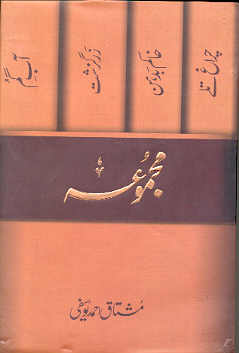
Mushtaq Ahmad Yousufi has done an great literary work in Urdu Adab which is very worthy and Urdu is prude of Yousufi. Some light is thrown on his work below:

• Chiragh talay (1961)

• Khakam-ba-dahan (1969)

Yousufi's second book was Khakam ba dahan (Dust in my mouth) which was published in 1969 and dedicated to his wife, Idrees Fatema. So far 14 editions of this book have been printed. It has eight articles, in addition to a foreword written by the author.

• Zarguzasht (1976)

Yousufi's third book was Zarguzasht which was published in 1976. It has 11 articles in addition to the foreword, 'Tuzk-i-Yousufi'.

• Aab-i-gum (1990)

His fourth book, Aab-i-gum, was published in 1990. Dedicated to his children, Arshad, Sarosh, Rukhsana and Seema, it runs into 404 pages and has five articles, in addition to the foreword. One of his major work was' rashtriya joota"

First two won Adamjee Prize, while last one got the Hijra Award as well as Pakistan Academy of Letters Award for best book, 1990. Awarded Sitara-i-Imtiaz and Hilal-i-Imtiaz.

Wednesday, July 28, 2010

Naseem Hijazi; the Finest Urdu Historical Novelist

Sharīf Husain (Urdu: شریف حسین), more commonly by his pseudonym Nasīm Hijāzī (Urdu: نسیم حجازی, commonly transliterated as Naseem Hijazi, or Nasim Hijazi) (c. 1914- March 1996) was an Urdu writer who is well-known for his novels dealing with Islamic history. He was born at Wazirabad in Pre-Partition India in an Arain family and migrated to Pakistan after independence from the British Rule and subsequent partition of India in 1947. He lived most of his life in Pakistan and died in March 1996.

As a novel writer, Naseem Hijazi is regarded as one of the finest writers of Urdu language especially in the later 20th Century. Among his popular contemporaries were Ibn-e-Safi, Saadat Hasan Manto, and Shafiq-ur-Rehman, all having their particular line of literature.

Naseem Hijazi is known for his potent and romantic description of history. There are only two writers prior to Hijazi who wrote history novels in Urdu: Abdul Haleem Sharar and Sadiq Sardhunwi, but Hijazi's writing is most credible in terms of historic description and accuracy. He exercised extra care to back his study of history by thorough research and to cite his sources whenever possible. Hijazi creates his powerful expression by blending this study of history with fairytale romanticism. The story usually revolves around characters who were related to, and shown present at the actual historical event that he wishes to focus on.

Naseem Hijazi's bases most of his work in Islamic history. In dealing with this history, he shows both the rise and fall of the Islamic Empire. His novels Muhammad Bin Qasim, Aakhri Ma'raka, Qaisar-o Kisra and Qafla-i Hijaz describe the era of Islam's rise to political, militaristic, economic, and educational power. While Yusuf Bin Tashfain, Shaheen, Kaleesa aur Aag, and Andheri Raat ke Musafir describe the period of Spanish Reconquista. In one of these novels (Kaleesa Aur Aag) he has painfully, yet truthfully, depicted the infamous Inquisition that began by targeting Jews and ended with the conversion or expulsion of the Moriscos or Muslims.

In Akhri Chataan, he describes the Central Asian conquests of Genghis Khan and his destruction of the Khwarizm Sultanate. The novel shows the brutal conquests of the Mongols, the military geniuses of Genghis Khan, the undying will power of Sultan Jalal ud-Din Khwarizm Shah, and the unworthy condition of the Abbassid Caliphate of Baghdad.

He wrote two sequential novels on British conquest of India, and described the shortcomings of Indian nations after the collapse of Mughal Empire. The story, Mu'azzam Ali, starts a little before the Battle of Plassey. The lead character, Muazzam Ali joins the fight against the British with the army of Siraj ud-Daula. The story goes around as the character moves from one place in India to another in search of the lost glory and freedom. He takes part in the third battle of Panipat and finally settles in Srirangapattana that was growing in power under the towering personality of Haider Ali. The book ends almost around the death of Haider Ali. The second book, Aur Talwar Toot Gayee (And the Sword is Broken) is more about Haider's son Sultan Tipu where the same character is finding his dreams being fulfilled in Tipu's valiant endeavors against the British East India Company. The book culminates in the sad and untimely martyrdom of Sultan Tipu.

He also wrote a novel on the Independence of Pakistan named Khaak aur Khoon. Many believed that the novel was his own story.

This writer seems to have been inspired a lot by Allama Muhammad Iqbal's poetry. He tries, not very unlike Iqbal, to remind his readers of the lost glory of the Muslims and in a way inspire them to work with commitment to achieve lost glory in all walks of life. He portrays Islamic tolerance, the will to fight for the protection of the weak, and the love for arts and knowledge. His readers believe that he has best illustrated Allama Muhammad Iqbal's Islamic philosophical ideal of "khudi" in Urdu prose, where in a way he has justifiably imparted the message that is presented in Iqbal's "The Reconstruction of Religious Thought in Islam".

Naseem Hijazi has immensely influenced his readers both in and out of Pakistan. He has been one of the key sources of Islamic ideologies in Pakistan and helped build valour during the Soviet-Afghan War. Many Pakistani educated youngsters throughout 1950s till today are believed to have been emotionally and ideologically inspired by his writings. He enjoys a very large reader base even after his death.

Three of Naseem Hijazi's novels have been dramatized. Akhri Chataan and Shaheen were dramatized in 1980s and were televised on Pakistan Television Corporation (PTV) as independent drama serials. Akhri Chataan is considered to be the greatest historic attempt ever made by PTV. The theme songs composed for the serial and the character play of Sultan Jalal ud-Din by Salim Nasir earned high acclaim.

The Novel Khaak aur Khoon was dramatized into a movie with the same name and is one of few block buster movies that Lollywood or Lahore film industry has ever produced.

It is argued that many of his novels, if provided with the production facilities of Hollywood, will produce movies equal in grandeur to Ben-Hur, Braveheart and The Patriot. But due to the lack of required attention, a great work of literary art is untouched by the filming icons.

Novels/books by Naseem Hijazi

• Khaak aur Khoon (Dirt and Blood)
• Yousuf bin Tashfin
• Akhari Chattan (Volume-1) Online (The Last Rock)
• Akhari Chattan (Volume-2) Online (The Last Rock)
• Aakhari Marka (The Last Battle) (fiction)
• Andheri Raat Ke Musafir (Travelers of the Dark Night)

• Aur Talwar Toot Gai (Volume-1) (And the Sword was Broken)

• Aur Talwar Toot Gai (Volume-2) (And the Sword was Broken)
• Daastaan-e-Mujahid (Tale of the Fighter)
• Gumshuda Qaafley (The Lost Caravans)
• Insaan Aur Devta (The Human and the Deity
• Kaleesa Aur Aag (Church and Fire)
• Muhammad Bin Qasim
• Pakistan Se Diyare Haram Tak (travelogue)
• Pardesi Darakht (The Alien Tree) (fiction)
• Pouras Ke Hathi (Poras's Elephants) (comedy)
• Qafla-e-Hijaz (The Caravan of Hijaz)
• Qaisar-o-Kisra (Caesar and Kisra)
• Saqafat Ki Talaash (In Search of Culture) (comedy)
• Shaheen(Volume-1) (The Eagle)
• Shaheen(Volume-2) (The Eagle)
• So Saal Baad (After 100 Years) (comedy)
• Sufaid Jazeera (The White Island) (comedy)

Patras Bukhari; Urdu’s foremost humorist writer

Syed Ahmed Shah (Urdu: سید احمد شاہ ) (commonly known as Patras Bokhari - پطرس بخاری) HI, (1 October 1898, Peshawar – 5 December 1958, New York) was an Urdu humourist, educator, essayist, broadcaster and diplomat from Pakistan.

Patras received his early education from Peshawar and in 1916 he moved from Islamia College Peshawar to join Government College Lahore. After completing his Masters in English he was appointed as lecturer at the same institution.

Patras Bokhari left Government College Lahore in 1925 to study at Emmanuel College, Cambridge University to complete a Tripos in English. Many years later, the Bokhari English Prize was established there in his honor.

In 1927, he came back to Government College Lahore, and as a Professor remained there till 1939. Before the formation of Pakistan in 1947, he was the Director General of All India Radio. Being a Professor of English Literature he also served as the Principal of Government College Lahore from 1947 to 1950. The Urdu poets Faiz Ahmed Faiz and Noon Meem Rashid, were among his students. After the formation of Pakistan, he served as the first permanent representative of Pakistan in the United Nations from 1951–1954. From 1954-1958 he remained as the Under Secretary of the UN, Head of Information. He died during his diplomatic service and is buried in New York, USA.

He got a great success in his life, and was bestowed upon with many honors by Allah Almighty. Some of his successes and honors are mentioned below.

• His volume of essays, Patras Kay Mazameen - پطرس کے مظامین (Essays of Patras), published in 1927 is considered as an asset of Urdu humor.

• He accompanied Prime Minister Liaquat Ali Khan on his first visit to the United States as the Prime Minister's speech writer.

• In 1945 Patras Bokhari was awarded the Companion of the Indian Empire (CIE) Award.

• Bokhari Auditorium on Government College University is named after him.

• The Government of Tunisia, named a Road after him in Tunis, as a recognition for his contribution towards the freedom of Tunisia from French Colonial Rule in 1956.

• There is also a road named after him in Islamabad, Federal Capital of Pakistan.

• Editorial appears in the New York Times on 6 December 1958, a day after his demise, in which he was described as a Citizen of the World.

• In October 1998, to mark his birth centenary, the Government of Pakistan issued a postage stamp with his photograph under the series, Pioneers of Pakistan.

• On 14 August 2003 President of Pakistan, General Pervez Musharraf announced the conferment of Hilal-e-Imtiaz, posthumously to Patras Bokhari, the country's second highest Civilian Award.

Saturday, August 22, 2009

Urdu Poets ( Ibn-e- Insha)

Ibn-e-Insha (Punjabi, Urdu: ابن انشاء) (b. 15 June, 1927 d. 11 January, 1978) was an eminent Pakistani Leftist Urdu poet, humorist, Travelogue writer and Columnist. Along with his poetry, he was regarded one of the best humorists of Urdu. His poetry has a distinctive diction laced with language reminiscent of Amir Khusro in its use of words and construction that is usually heard in the more earthy dialects of the Hindi-Urdu complex of languages, and his forms and poetic style is an influence on generations of young poets.
He was born on June 15, 1927 as Sher Muhammad Khan (شیر محمد خان) in Phillaur tehsil of Jalandhar District, Punjab, India. His father hailed from Rajasthan. He did B.A. from Punjab University in 1946 and M.A. from University of Karachi in 1953. He was associated with various governmental services including Radio Pakistan, Ministry of Culture and National Book Centre of Pakistan. He also served UN for some time and this enabled him to visit a lot of places and was the reason of his subsequent travelogues. Some of the places that he visited includes Japan, Philippines, China, Hong Kong, Thailand, Indonesia, Malaysia, India, Afganistan, Iran, Turkey, France, UK and US. Insha got the mentors like, Habibullah Ghazanfer Amrohvi, Dr. Ghulam Mustafa Khan and Dr. Abdul Qayyum. Insha spent much of his time in Karachi. He died of Hodgkin's Lymphoma on January 11, 1978 in London and was buried in Karachi.

In article ads

Translate

Related Posts Plugin for WordPress, Blogger...

Labels

A Hameed (7) Abdul Haleem Sharar (2) Abdul Hameed Adam (2) Abdullah Hussain (1) Abid Ali Abid (2) Afgha (1) Afghanistan (3) Afsanay (247) Aftab Iqbal (1) Ahmad Faraz (181) Ahmad Nadeem Qasmi (64) Aijaz Siddiqui (1) Aitbar Sajid (66) Akbar Allahabadi (1) Akhtar Shirani (2) Akhtar ul Iman (1) Al-Qaeda (3) Aleem Ul Haq Haqqi (106) Ali Arman (1) Ali Baksh (1) Ali Sardar Jafri (1) Ali Shariati (1) Allama Iqbal (213) Altaf Fatima (1) Ameer Meenai (2) Amjad Islam Amjad (109) Anand Narain Mulla (1) Andrew Carrington (2) Anees Nagi (4) Anwar Maqsood (4) Anwar Masood (3) Arsh Malsiani (1) Articles (73) Articles on Ibn-e-Safi (5) Articles on Iqbal (9) Asad (232) Asad Ullah Khan Asad (43) Asad Ullah Khan Asad. (189) Ashfaq Ahmad (10) Ashfaq Hussain (1) Asrar Ahmad (120) Asrar Narwi (120) Astor (3) Ata ul Haq Qasmi (4) Autobiographies (3) Autographs (14) Awaz Saeed (1) Bahadur Shah Zafar (1034) Baluchistan (1) Bangladesh (1) Bano Qudsiya (5) Basheer Badar (1) Beena Sarwar (1) Benazir Bhutto (1) Biographies (7) Black Water (1) Boks by Gohar Sultana Uzma (1) Books by Abdul Haleem Sharar (1) Books by Abdullah Hussain (1) Books by Abul Hassan Ali Nadvi (1) Books by Aleem Ul Haq Haqqi (106) Books by Ashfaq Ahmad (3) Books by Bano Qudsiya (2) Books by Colonel Muhammad Khan (2) Books by Dr. Qasim Jalal (2) Books by Fahmida Kosar (1) Books by Habib Jalib (1) Books by Hashim Nadeem Khan (4) Books by Ibn-e-Insha (1) Books by Ibn-e-Safi (244) Books by Iffat Seher Pasha (1) Books by Javed Danish (1) Books by Khaqan Sajid (1) Books by Maha Malik (1) Books by Mazhar Kaleem (398) Books by Mir Taqi Mir (1) Books by Mirza Ghalib (1) Books by Mirza Hadi Ruswa (1) Books by Mumtaz Mufti (1) Books by Naseem Hijazi (27) Books by Parveen Shakir (6) Books by Premchand (1) Books by Qanita Rabia (1) Books by Qudratullah Shahab (4) Books by Riffat Siraj (6) Books by Rukhsana Nigar Adnan (20) Books by Shakeeb Jalali (1) Books by Shazia Chaudhry (1) Books by Shibli Naumani (1) Books by Taqi Usmani (2) Books by Tariq Ismail Sagar (72) Books by Umaira Ahmad (25) Books by Umm-e-Maryam (1) Books by Younus Javed (1) Books List (3) Brij Narain Chakbast (1) Bulleh Shah (1) Bushra Farrukh (1) Chacha Chakkan (11) Charagh Hassan Hasrat (1) Chillas (3) Colonel Muhammad Khan (3) Columnists (12) Columns (5) Comedy (22) Controversy (1) Dassu (1) December (1) Deputy Nazeer Ahmad (1) Dilawar Figar (1) Dr. Ahmad Safi (3) Dr. Anwar Zahidi (1) Dr. Aslam Farrukhi (1) Dr. Isar Ahmad Safi (1) Dr. Israr Ahmad (1) Dr. Kanwal Feroze (1) Dr. Mohsin Maghiana (1) Dr. Moinuddin Aqeel (1) Dr. Naseer Ahmad NAsir (2) Dr. Qasim Jalal (2) Dr. Rasheed Amjad (1) Dr. Safdar Mahmood (1) Dr. Saleem Wahid Saleem (1) Dr. Tahir-ul-Qadri (1) Dr. Waheed Ahmad (1) Drama (3) Drama by Naseem Hijazi (1) Drama Writers (7) Ehsan Sehgal (1) Eid Mubarak (1) Essays (18) Fahmida Kasar (1) Fahmida Riaz (1) Faiz Ahmad Faiz (9) Fani Badayuni (1) Fatima Surayya Bajia (1) Firaq Gorakhpuri (1) General Parvez Musharraf (2) Ghalib (232) Ghazals (2082) Ghazals by Ahmad Faraz (156) Ghazals by Ahmad Nadeem Qasmi (33) Ghazals by Aitbar Sajid (56) Ghazals by Amjad Islam Amjad (52) Ghazals by Bahadur Shah Zafar (1032) Ghazals by Habib Jalib (197) Ghazals by Ibn-e-Insha (12) Ghazals by Iftikhar Arif (17) Ghazals by John Elia (45) Ghazals by Mir Taqi Mir (136) Ghazals by Mirza Ghalib (189) Ghazals by Samina Raja (88) Ghazals by Shakeeb Jalali (73) Ghulam Abbas (13) Ghulam Bhik Nairang (2) Gilgit (3) Gilgit Baltistan (3) Gohar Sultana Uzma (1) Golden Temple (2) Greetings (2) Gul Naukhaiz Akhtar (1) Gulzar (2) Habeeb Jalib (273) Habib Jalib (274) Hafeez Jallandhari (2) Hafeez Taib (1) Haider Qureshi (27) Hakeem Ahmad Shuja (1) Hamd (2) Hamd by Iftikhar Arif (1) Hamd by Mir Taqi Mir (1) Hameed Akhtar (2) Hashim Nadeem Khan (5) Hasrat Jaipuri (1) Hassan Abidi (1) Hassan Askari (2) Himayat Ali Shair (1) Historic Novels by Naseem Hijzai (2) Historical Novels (18) Historical Novels by Naseem Hijzai (16) History (18) Humor Novel (1) Humor Novel by Naseem Hijazi (2) Humorists (15) Hunza (3) Ibn-e-Insha (107) Ibn-e-Safi (253) Ibn-e-Safi Autograph (1) Ibrahim Jalees (2) Ibrahim Zauq (1) Iffat Seher Pasha (1) Iftikhar Arif (37) Ihsan Danish (2) Imam Baksh Nasikh (1) Imran Series (520) Imran Series by Ibn-e-Safi (120) Imran Series by Mazhar Kaleem (398) Imtiaz Ali Taj (12) India (6) Indra Gandhi (1) Insha Jee (104) Interviews (1) Intizar Hussain (6) Iraq (3) Ishtiaq Ahmad (1) ISI (1) Islamic Books (3) Ismat Chughtai (4) Israr-ul-Haq Majaz (2) Jagannath Azad (1) Jamal Ihsani (1) Jameel-ud-Din Aali (2) Jamia Hafsa (1) Jan Nisar Akhtar (1) Jangannath Azad (1) Jasoosi Dunya (124) Jasusi Adab (1) Jasusi Dunya (2) Javed Akhtar (1) Javed Danish (1) Jazib Qureshi (1) Jedendar Pal (1) Jigar Muradabadi (2) Jihad (6) John Elia (64) Josh Malihabadi (2) Joun Elia (65) Journalists (1) Kaifi Azmi (4) Kashmir (1) Khakay (15) Khaleel-Ur-Rahman Azmi (1) Khaqan Sajid (2) Khumar Barabankvi (1) Khwaja Ahmad Abbas (2) Khwaja Haider Ali Aatish (1) Khwaja Mir Dard (1) Kishwar Naheed (1) Kohistan (1) Krishen Chander (8) Kuwait (1) Lal Masjid (2) maha Malik (1) Majeed Amjad (1) Majrooh Sultanpuri (3) Makhdoom Muhiuddin (1) Mansha Yaad (5) Masnawi (4) Masnawi by Mir Taqi Mir (4) Maulana Altaf Hussain Hali (1) Maulana Ghulam Rasool Meher (1) Maupassant (3) Mazhar Kaleem (399) Meer (142) Meer Anees (1) Meer Taqi Meer (143) Mir (142) Mir Taqi Mir (144) Mirza Amjad Baig (1) Mirza Asad Ullah Khan Ghalib (232) Mirza Athar (1) Mirza Ghalib (235) Mirza Hadi Ruswa (2) Mirza Khan Daag (1) Mohsin Naqvi (3) Momin Khan Momin (1) Mufti (2) Muhammad Aasim Butt (18) Muhammad Izhar-Ul-Haq (1) Muhammad Rafi Sauda (1) Muhammad Taqi (142) Mukti Bahini (1) Mumtaz Mufti (6) Muneer Niazi (4) Munshi Premchand (16) Murtaza Birlas (1) Mushtaq Ahmad Yusufi (3) Muslim Saleem (1) Mustafa Rahi (1) Mustafa Zaidi (1) Mustansar Hussain Tarar (2) Muztar Khairabadi (1) Na'at (4) Na'at by Ahmad Nadeem Qasmi (1) Na'at by Mir Taqi Mir (1) Na'at by Samina Raja (1) Na'ats by Bahadur Shah Zafar (1) Naeem Amrohvi (1) Naeem Arshad (1) Nagar (3) Naieyer Masud (1) Naresh Kumar Shad (1) Naseem Hijazi (27) Nasir Kazmi (5) National Anthem of Pakistan (1) NATO (2) Nazmain (17) Nida Fazli (1) Noon Meem Danish (1) Noon Meem Rashid (3) Northen Areas of Pakistan (3) Noshi Gillani (1) Novelists (47) Novels (889) Novels by Ibn-e-Safi (121) Novels by Mazhar Kaleem (398) Novels by Naseem Hijazi (21) Novels by Tariq Ismail Sagar (47) Nushoor Wahidi (1) O Henry (2) Operation Blue Star (2) Pagal Adilabadi (1) Paigham Aafaqi (1) Pakistan (22) Pandit Hari Chand Akhtar (1) Parveen Shakir (11) Parween Shakir (6) Patras Bukhari (7) Philosophers (1) Pieces (1) Pirzada Qasim Raza (1) Poems (584) Poems by Ahmad Faraz (23) Poems by Ahmad Nadeem Qasmi (18) Poems by Aitbar Sajid (11) Poems by Allama Iqbal (198) Poems by Amjad Islam Amjad (54) Poems by Habib Jalib (75) Poems by Ibn-e-Insha (64) Poems by Iftikhar Arif (16) Poems by John Elia (19) Poems by Samina Raja (90) Poems by Shakeeb Jalali (17) Poetry (2747) Poetry Books (10) Poetry by Ahmad Faraz (179) Poetry by Ahmad Nadeem Qasmi (51) Poetry by Aitbar Sajid (65) Poetry by Allama Iqbal (198) Poetry by Amjad Islam Amjad (106) Poetry by Bahadur Shah Zafar (1033) Poetry by Habib Jalib (272) Poetry by Ibn-e-Insha (74) Poetry by Iftikhar Arif (36) Poetry by John Elia (64) Poetry by Mir Taqi Mir (143) Poetry by Mirza Ghalib (233) Poetry by Parveen Shakir (6) Poetry by Samina Raja (179) Poetry by Shakeeb Jalali (91) Poets (146) Professor Hameed Ahmad Khan (1) Professor Sahar Ansari (1) Punjabi (1) Putras Bukhari (1) Qabil Ajmeri (1) Qamar Ali Abbasi (1) Qanita Rabia (1) Qasaayid (11) Qasayid by Mirza Ghalib (11) Qaseeda (11) Qaseeda by Mirza Ghalib (11) Qateel Shifai (3) Quartrain (32) Quartrains by Mirza Ghalib (32) Qudrat Ullah Shahab (5) Qurrat-ul-Ain Haider (4) Raaz Chandpuri (1) Raees Amrohi (1) Rahat Indori (1) Raja Mehdi Ali Khan (1) Rajinder Singh Bedi (4) Ram Lal (1) Rashid Jahan (1) Ravish Siddiqui (1) RAW (1) Razia Butt (1) Riffat Siraj (6) Rubaiyat (32) Rubayi (32) Rubayi by Mirza Ghalib (32) Rukhsana Nigar Adnan (20) Russia (1) Sa'adat Hassan Manto (111) Sadam Hussain (2) Safi Lakhnavi (1) Saghar Siddiqui (1) Sahir Hoshiarpuri (1) Sahir Ludhianvi (2) Sajjad Zaheer (1) Samina Raja (181) Satyapal Anand (1) Saud Usmani (1) Sayed Abul Hassan Ali Nadvi (4) Sayyid Maududi (2) Sazeen (1) Scholars (12) Seemab Akbarabadi (1) Seerat-e-Rasool (1) Shabnam Romani (1) Shafeeq Ur Rahman (2) Shakeb Jalali (91) Shakeeb Jalali (94) Shakeel Badayuni (1) Shakib Jalali (91) Shameem Karhani (1) Shamsur Rahman Faruqi (1) Shan-ul-Haq Haqqi (2) Sharif Hussain (22) Shaukat Siddiqui (6) Shaukat Thanvi (3) Shazia Chaudhry (1) Sheikh Abdul Qadir (1) Shibli Naumani (2) Short Stories by A Hameed (4) Short Stories by Ahmad Nadeem Qasmi (8) Short Stories by Ashfaq Ahmad (4) Short Stories by Bano Qudsiya (2) Short Stories by Ghulam Abbas (12) Short Stories by Gulzar (1) Short Stories by Haider Qureshi (26) Short Stories by Hassan Askari (1) Short Stories by Ibn-e-Insha (3) Short Stories by Ibrahim Jalees (1) Short Stories by Intizar Hussain (4) Short Stories by Ismat Chughtai (2) Short Stories by Jogendar Pal (1) Short Stories by Khwaja Ahmad Abbas (1) Short Stories by Krishen Chander (6) Short Stories by Mansha Yaad (2) Short Stories by Manto (109) Short Stories by Maupassant (3) Short Stories by Mirza Amjad Baig (1) Short Stories by Muhammad Aasim Butt (17) Short Stories by Mumtaz Mufti (4) Short Stories by Premchand (14) Short Stories by Qudrat Ullah Shahab (1) Short Stories by Qurrat-ul-Ain Haider (2) Short Stories by Rajinder Singh Bedi (3) Short Stories by Ram Lal (1) Short Stories by Shafeeq Ur Rahman (1) Short Stories by Shaukat Siddiqui (3) Short Stories by Shaukat Tahnvi (1) Short Stories Lists (6) Short Story Writers (41) Siddiq Salik (1) Sikandar Ali Wajd (1) Siraj Aurangabadi (1) Skardu (3) Stories (11) Sudarshan Faakir (1) Sufi Tabassum (1) Sufis (5) Sulaiman Areeb (1) Sulaiman Nadvi (2) Syed Al-e-Ahmad (1) Tabish Dehlvy (1) Taliban (4) Taqi Usmani (3) Tarannum Riaz (1) Tariq Ismail Sagar (26) Tilok Chand Mahroom (1) Translated Books (1) Translated Short Stories (5) Translated Urdu Books (1) Travelogue Writers (11) Travelogues (16) Travelogues by Naseem Hijazi (1) Travelogues by Tariq Ismail Sagar (2) Ubaidullah Aleem (2) Ubaidullah Baig (1) Umaira Ahmad (26) Umm-e-Hassan (1) Umm-e-Maryam (1) United States of America (7) Urdu (197) Urdu Books (951) Urdu Pieces (14) USA (6) Usama Bin Laden (3) Ustad Daman (1) Videos (5) Waheed Akhtar (1) Wali Deccani (2) Wasi Shah (1) Wasif Ali Wasif (2) Wazeer Agha (4) Yagana Changezi (1) Yasmeen Hameed (1) Younus Javed (1) Yousuf Saleem Chishti (1) Zafar (1033) Zafar Iqbal (1) Zameer Jafri (3) Zarina Sani (1) Zohra Nigah (1)